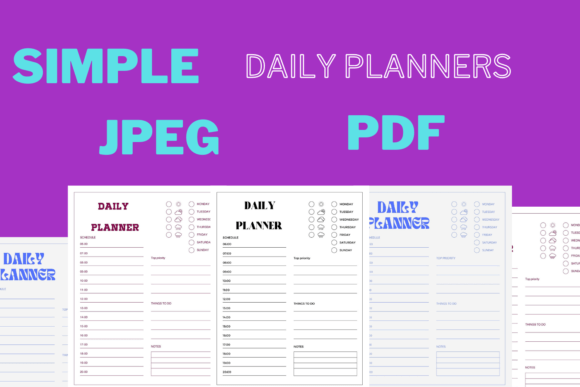
Simplest Daily Planner: 90 Pages of Functional Design
In the realm of graphic design, the most elegant solutions are often the simplest. For creators, marketers, and business owners seeking to bring order to chaos, the Simplest Daily Planner, 90 Pages Freebies stands out as a prime example of functional, user-centric design. This isn't just a printable template; it's a foundational creative asset designed to streamline daily workflows, enhance personal branding, and serve as a versatile tool for a multitude of visual communication projects.
At its core, this product offers an instant downloadable and printable simple planner template. The package is thoughtfully curated: a ZIP file containing one comprehensive PDF with 90 pages ready for printing, alongside three high-resolution JPEG templates (300 DPI) that provide immediate design flexibility. This structure speaks directly to a modern design workflow, prioritizing accessibility, print-ready quality, and creative adaptability.
Why a Simple Planner is a Powerful Design Asset
From a visual design perspective, a well-executed planner transcends its utilitarian purpose. It becomes a study in visual hierarchy, typography, and white space management. The "simplest" approach here is intentional—it creates a clean canvas that can be personalized or used as-is, ensuring readability and reducing cognitive load for the user. This principle is fundamental in UX design and editorial layout, where clarity is paramount.
For designers and creators, this resource offers more than daily scheduling. It provides a practical framework for exploring layout concepts, understanding grid systems, and testing how different type treatments function in a real-world context. The three distinct designs included allow for comparative analysis, helping you refine your aesthetic preferences and understand how subtle changes in structure impact user experience.
Practical Applications Across Creative Fields
The true value of a resource like the Simplest Daily Planner lies in its versatility. Its applications extend far beyond personal organization, serving as a springboard for various professional and creative projects.
- Brand Identity & Stationery: Use the planner templates as a starting point for developing a cohesive branded stationery suite. The clean lines and neutral space are ideal for incorporating custom logos, color palettes, and brand-specific typography, strengthening overall brand identity.
- Marketing & Social Media Content: The structured pages are perfect for creating behind-the-scenes content for social media graphics. Showcase your planning process, create "day in the life" visuals, or use the templates as a base for designing promotional checklists and content calendars.
- Digital Products & Packaging: For those in the business of selling digital products, this planner can be bundled, customized, or used as inspiration for creating your own low-content books. Its print-ready nature also makes it a thoughtful addition to a packaging design for a creative toolkit or subscription box.
- Presentations & Web Design: The principles of clear information architecture found in the planner can be applied to UI design for dashboards or the layout of a web design portfolio. Use its grid system to organize content in presentations, ensuring a professional and modern aesthetic.
Tips for Selecting and Using Design Elements Effectively
When integrating any creative asset into your workflow, a strategic approach ensures quality and consistency. Here are key considerations for maximizing the value of resources like this planner:
- Evaluate for Scalability: Always check if the design elements, especially vector-based ones, scale without loss of quality. The 300 DPI JPEGs here are excellent for print, but for larger format advertising campaigns, you may need to adapt the design.
- Consider Audience and Context: Who is the end-user? A planner for a corporate client will differ in tone from one for a freelance artist. Ensure the visual style—whether minimalist, bold, or illustrative—aligns with your project's goals and audience expectations.
- Maintain Visual Consistency: If customizing, develop a mini style guide. Define a limited color palette, choose complementary fonts, and establish rules for imagery. This consistency builds recognition and professionalism across all your creative projects.
- Focus on Usability: In both print design and digital interfaces, the user's journey is key. Test the planner's flow. Is there enough writing space? Are the sections logically grouped? A positive user experience is a hallmark of great design.
Ultimately, thoughtfully chosen design assets are investments in quality and efficiency. They provide a professional foundation upon which to build, allowing you to focus your energy on unique creative expression rather than reinventing basic structures. A resource like the Simplest Daily Planner embodies this philosophy—it offers a polished, functional starting point that can elevate your personal organization, enhance your brand's visual communication, and inspire your next great design project.